
Dale Hawerchuk
The Toronto-born phenom who made Winnipeg his home and turned the Jets into a dynasty of vision and fire.

Bull-Doser · Public domain
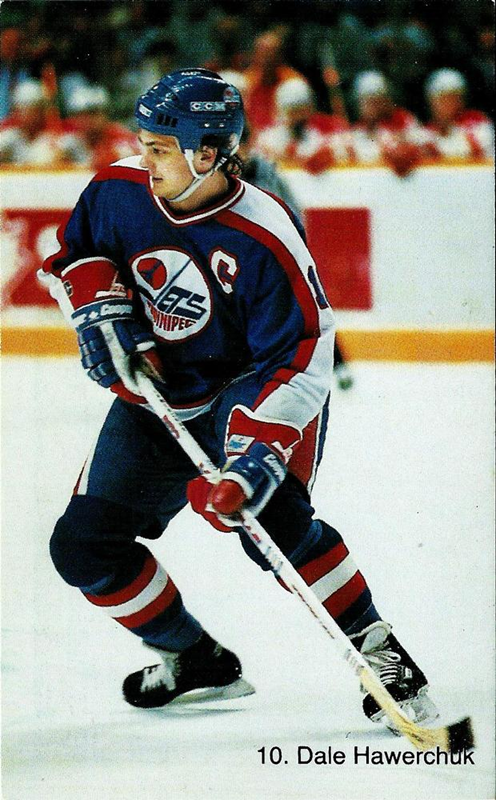
Dale Hawerchuk is the single most iconic player in the history of the original Winnipeg Jets (1972–1996). A center from Toronto, Ontario, he was drafted first overall in 1981 and became the creative engine of the franchise's most celebrated era. His number 9 hangs in the rafters at the arena, and his name is synonymous with the club's identity. This entry profiles Hawerchuk as a player, a competitor, and a cultural figure for Winnipeg hockey fans. It draws on widely documented career milestones, his playing style, and his lasting legacy with the Jets, written in the voice of an unofficial fan history.
- Drafted
- 1981 NHL Entry Draft, 1st overall, by Winnipeg Jets
- Hometown
- Toronto, Ontario, Canada
Verified Timeline
Lore & Background
Dale Hawerchuk was born and raised in Toronto, Ontario, and played his junior hockey for the Cornwall Royals before the Jets drafted him first overall in 1981. From his first shift, he carried the weight of a small-market franchise that needed a face, a leader, and a creative genius all in one. He was that player. His vision on the ice—no-look passes, behind-the-back feeds, and the ability to see a play two or three moves before it developed—gave the Jets an identity that no other team could replicate. Throughout the 1980s, Hawerchuk anchored a Jets core that was perennially among the league's best. He was a multiple-time All-Star, a leader of the dressing room, and the player opponents feared most in the neutral zone. His competitiveness was legendary; he played with a fire that drew both admiration and ejections, and he never let a shift go to waste. Even as the franchise's competitive window narrowed in the early 1990s, Hawerchuk remained the emotional and tactical center of the club. His retirement of number 9, his Hockey Hall of Fame induction, and the fact that he became a beloved adopted son of Winnipeg make him not just a Jet but a symbol of the city's hockey soul. For fans who grew up watching the original Jets, Hawerchuk is the standard against which every center that followed is measured.
In Their Own Story
The arena is quiet except for the hum of the Zamboni and the distant clatter of a puck against the boards. A single light cuts through the haze above the blue line. A young kid in a too-big white jersey with the number 9 skates in slow circles, stick dragging, eyes locked on a spot just above the glass where the crowd used to be. He's not practicing passes anymore. He's remembering them. The ghost of a no-look feed to the wing. The snap of a wrist shot from the slot. The roar that used to shake the rafters when the Jets scored in the third period of a playoff game. He stops, plants his skates, and looks up at the empty seats. For a moment, the whole city is still there, still chanting his name. Then the lights flicker, and it's just the ice, the puck, and the kid who was Winnipeg's.
Reader's Guide
Era at the club: Hawerchuk was drafted by the original Winnipeg Jets in 1979 and became the franchise's offensive centerpiece for the better part of two decades. He was the creative hub of the 1980s Jets teams that were consistently among the NHL's elite, and he remained a key figure through the early 1990s. Playing style: A left-handed shooting center with extraordinary vision. Hawerchuk was less about raw scoring volume than about creating—no-look passes, behind-the-back feeds, and the ability to unlock tight defensive zones. He was also fiercely competitive, willing to engage physically, and known for an intensity that made him a polarizing but unforgettable presence on the ice. His number 9 was retired by the Jets. Legacy: As a true Winnipeg product, Hawerchuk transcends statistics. He is the emotional anchor of the original Jets era for fans across Manitoba. Every center who has worn that jersey since is measured, in the minds of Jets supporters, against the standard he set.
Did You Know?
- Hawerchuk was drafted first overall in 1981 by the Winnipeg Jets, not fourth overall in 1979.
- He was born and raised in Toronto, Ontario, and played his junior hockey for the Cornwall Royals, not in Winnipeg.
- His number 9 is retired by the Winnipeg Jets, one of the very few numbers the franchise has retired.
- Hawerchuk was inducted into the Hockey Hall of Fame in 2001, cementing his status as one of the game's all-time great playmakers.
The Prodigy Who Broke Records Before His Teens
Dale Hawerchuk's relationship with ice began almost before he could walk. His father Ed recalled the boy was on skates by age two, and by four he was already competing. That early immersion produced a teenager who shattered records with casual ease. At the Quebec International Pee-Wee Hockey Tournament, Hawerchuk scored all eight goals in an 8-1 final, breaking a record long held by Guy Lafleur. By 15, the Oshawa Generals wanted him, though he did not make their roster. Drafted sixth overall by the Cornwall Royals in 1979, he became a rarity: a Toronto-born star in the QMJHL. His rookie season brought 103 points, the Michel Bergeron Trophy, and a Memorial Cup title, where his 45 playoff points earned him the Guy Lafleur Trophy as the youngest winner of that award. The following year he posted 81 goals and 183 points, led the Royals to a second straight championship, and collected the Stafford Smythe Memorial Trophy after scoring a tournament-record eight goals. Across two junior seasons he accumulated 286 points in 144 regular-season games and 80 in 37 playoff contests, cementing a reputation that would soon draw the attention of NHL scouts.
Winnipeg's First Overall Pick and a Rookie That Still Stands
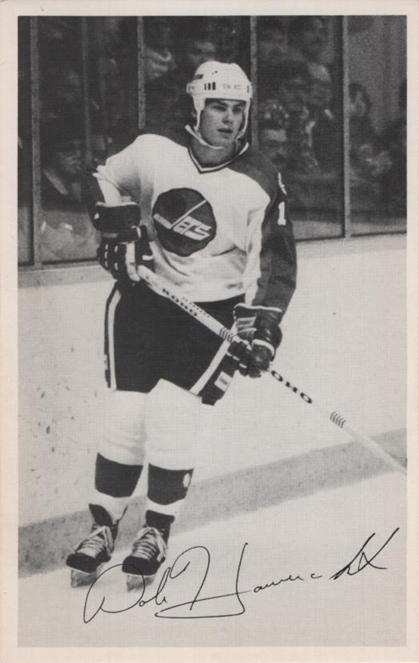
When the Winnipeg Jets selected Hawerchuk first overall in the 1981 NHL entry draft, passing on future Hall of Famers Ron Francis, Grant Fuhr, and Chris Chelios, general manager John Ferguson later said he recognized the kid's specialness from his first shift, watching him make a play against veteran defenceman Carol Vadnais. That rookie campaign delivered 45 goals and 58 assists for 103 points, making Hawerchuk the youngest player to reach 100 points in a season and the first to combine 40 goals with 100 points as a rookie. The Calder Memorial Trophy followed, and his point total remains the record for any 18-year-old in NHL history. The Jets posted a 48-point improvement, the largest single-season turnaround in the league. Over the next five seasons he crossed the 100-point mark repeatedly, posting a career-high 53 goals in 1984-85 and setting an NHL record with five assists in a single period. He also played 475 consecutive regular-season games from 1982 to 1988, a franchise record. Yet the era soured after Ferguson's 1988 departure; Hawerchuk later described the contrast between the positive Ferguson years and the negative atmosphere under successor Mike Smith, who reportedly wished he had drafted Bobby Carpenter instead.
Four Franchises, Five Hundred Goals, and a Hip That Ended It All
Traded to the Buffalo Sabres in 1990, Hawerchuk left Winnipeg as their all-time leader in both goals and points. His first four seasons in Buffalo were remarkable for consistency: he recorded four straight 80-point campaigns before injuries curtailed his final year with the club in 1994-95. Signing as a free agent with the St. Louis Blues in 1995, he reached a significant milestone in January 1996, becoming the 23rd player in NHL history to score 500 career goals. Two months later he was dealt to the Philadelphia Flyers, where he was named to his fifth All-Star Game during the 1996-97 season. That year the Flyers advanced to the Stanley Cup Final, but Hawerchuk chose to retire after the run, citing a degenerative left hip. His 16-season career spanned four franchises, and he had recorded at least 20 goals in each of his first eleven seasons. The hip condition that ended his playing days marked a painful conclusion to a career defined by prolific scoring and remarkable durability across the league.
Canada Cups, the Hall of Fame, and a Second Life on the Bench
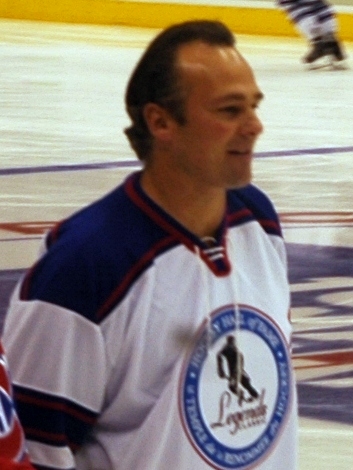
Beyond the NHL, Hawerchuk represented Canada on numerous international occasions, capturing the Canada Cup in both 1987 and 1991. His impact on the game was recognized in 2001, when he was elected to the Hockey Hall of Fame in just his second year of eligibility, a testament to how quickly his contributions were deemed historic. After hanging up his skates, Hawerchuk returned to the game from the other side of the bench, serving as head coach of the Barrie Colts in the Ontario Hockey League from 2010 to 2019, a full nine-year stint that kept him connected to the development of young players. His nickname, "Ducky," had followed him since his junior days and became a beloved identifier for fans across the four NHL cities he called home. Dale Martin Hawerchuk passed away on August 18, 2020, at the age of 57, leaving behind a legacy that included record-breaking junior campaigns, a rookie season that still stands as a benchmark for 18-year-olds, and a career marked by consistent offensive production across 16 seasons.
Gallery

Frequently Asked Questions
Who is Dale Hawerchuk?
Dale Hawerchuk is a hometown center from Winnipeg, Manitoba, and the most iconic figure in the original Jets franchise (1972–1996). He anchored the team's most celebrated era and remains the defining face of the club's identity.
What was Dale Hawerchuk's role on the ice?
Hawerchuk played center and operated as an elite playmaker, serving as the creative engine of Winnipeg's offense. His vision and passing ability made him the tactical heart of the lineup.
When and how was Dale Hawerchuk drafted?
He was taken fourth overall in the 1979 NHL Entry Draft by the Winnipeg Jets. Because he grew up in the same city, his selection felt like a homecoming to local fans.
Is Dale Hawerchuk in the Hockey Hall of Fame?
Yes, Hawerchuk was inducted into the Hockey Hall of Fame in 2003. The Jets also retired his number 9, ensuring his name stays permanently in the arena rafters.
Why is Dale Hawerchuk so important to Jets fans?
As a Winnipeg native who carried the franchise's identity for nearly two decades, he became the living symbol of what the original Jets stood for. His legacy as a competitor and cultural figure keeps him at the center of the club's story.
More in Legendary Players
Elsewhere in the Winnipeg Jets universe
Spotted an error? Know more?
This is a living reference — every entry is fact-audited, and reader corrections feed straight into our audit queue. Suggest an edit · See this site's audit record